




Abstract
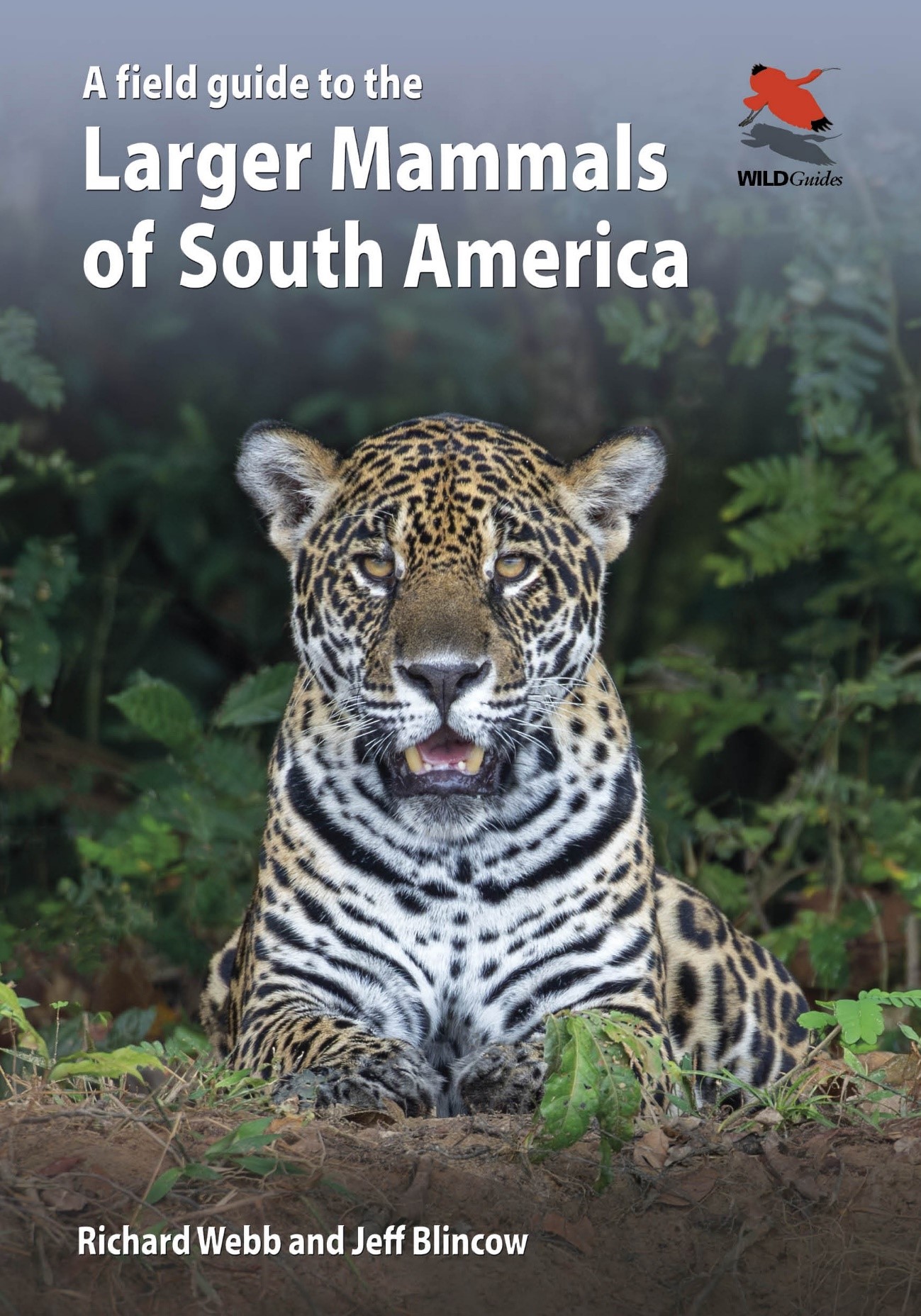
Webb R. & Blincow J. 2024. A Field Guide to the Larger Mammals of South America. Princeton University Press. ISBN 9780691174099. 488 pp. $49.95/£42.00.
Why is mammal identification important? Besides just being fun and enriching to watch wildlife, field guides can serve as a starting tool to help determine the presence–absence of species in a particular area to build distribution models (Gu & Swihart 2024). Previous field guides of mammals in South America include the books of Reid, Emmons and the classic of Eisenberg (Eisenberg 1989, Eisenberg & Redford 2000, Emmons & Feer 1997, Redford & Eisenberg 1992, Reid 1997) all with excellent illustrations.
References
Gu W, Swihart RK. 2004. Absent or undetected? Effects of non-detection of species occurrence on wildlife–habitat models. Biological Conservation. 116(2):195–203. https://doi.org/10.1016/S0006-3207(03)00190-3.
Eisenberg JF. 1989. Mammals of the Neotropics. The Northern Neotropics: Panama, Colombia, Venezuela, Guyana, Suriname, French Guiana. Vol 1. 449 pp. University of Chicago Press.
Eisenberg JF, Redford KH. 2000. Mammals of the Neotropics: Ecuador, Bolivia, Brazil. Vol 3. University of Chicago Press.
Emmons LH, Feer F. 1997. Neotropical rainforest mammals: a field guide. 2nd ed. Chicago: University of Chicago Press.
Redford KH, Eisenberg JF. 1992. Mammals of the Neotropics, The Southern Cone, Chile, Argentina, Uruguay, Paraguay. Vol 2. 435 pp. University of Chicago Press.
Reid FA. 1997. A field guide to the mammals of Central America and Southeast Mexico. 334 pp. Oxford University Press.

This work is licensed under a Creative Commons Attribution 4.0 International License.